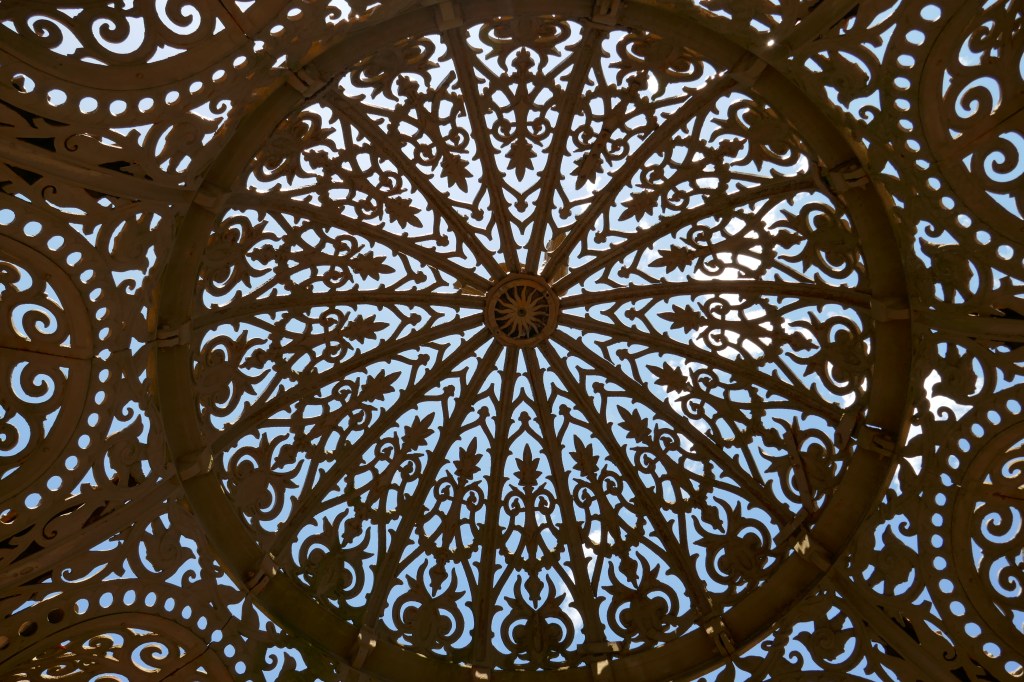
Walking through City Park in Launceston, you’ll come across the Children’s Jubilee Fountain, not far from the conservatory and Monkey Island. Originally, this fountain graced the park’s main gates on Cameron Street, as depicted in the postcard below. In the photograph of the gates today, you can still faintly see the hexagonal base where the fountain used to stand.

The idea of purchasing a fountain emerged after a Jubilee Festival in 1887 celebrating the Golden Jubilee of Queen Victoria. With a surplus of £10-£12 from the festival, the decision was made to create a permanent children’s memorial. Subscriptions were sought, with a focus on children’s contributions.
It is the children’s pennies that are wanted, in order that every boy and girl in the town may feel they have a share in the undertaking and a sense of ownership in the fountain when erected.
Launceston Examiner, 30 January 1888
To encourage a sense of ownership and involvements among the town’s children, their pennies were collected to fund the fountain’s construction.
Fountain Chosen from MacFarlane’s Casting Catalogue
The Launceston Examiner reported on the fountain’s design in 1891, describing it as an elaborate structure with griffins and mythical figures, featuring jubilee portraits of Queen Victoria and the civic coat of arms.
It is a handsome design, the fountain proper being covered with an octagonal canopy, supported on pillars standing 18ft high. The canopy is elaborately ornamented with griffins and other mythical figures, and is surmounted by an eagle with outspread wings. Around the top will be placed jubilee portraits of Her Majesty, alternated with the civic coat of arms. The fountain rises up in the centre to be height of about 5ft, and is provided with the necessary drinking cups. The inscription it will bear will be – “Presented to the city by the children of Launceston in commemoration of Her Majesty’s Jubilee, June 20, 1887″.
Launceston Examiner, 18 June 1891
The Children’s Fountain was cast by MacFarlane’s in the Saracen Foundry in Scotland. Early illustrations show small cups attached by chains to the central tower, allowing the public to access the fountain’s water. The promotion of public drinking water as a means to encourage temperance and community improvement was evident in the catalogue from the 1880s. The Macfarlane’s Castings Catalogue has been digitised, and pages 12-13 show the chosen fountain. The full catalogue can be accessed here.
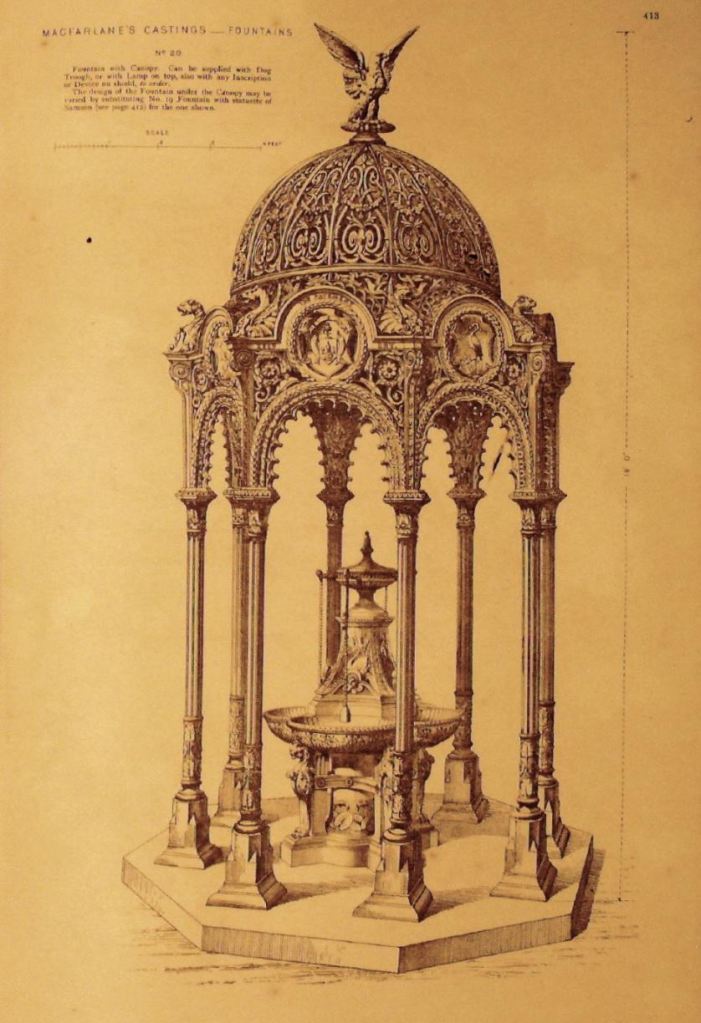
The elegant structure was designed to commemorate Queen Victoria’s Jubilee of 1887. However, due to its considerable cost, the fountain’s installation was delayed until Queen Victoria’s Diamond Jubilee a decade later.
Text from the Information Board
An information board on the fencing at the Cameron Street gates provides further information.
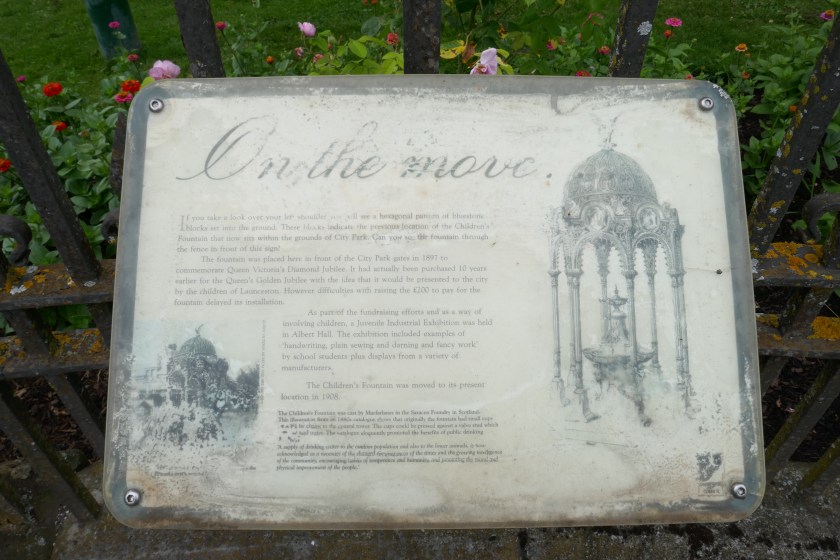
On the Move
If you take a look over your left shoulder, you will see a hexagonal pattern of bluestone blocks set into the ground. These blocks indicate the previous location of the Children’s Fountain that now sits within the grounds of City Park. Can you see the fountain through the fence in front of this sign?
The fountain was placed here in front of the City Park gates in 1897 to commemorate Queen Victoria’s Diamond Jubilee. It had actually been purchased 10 years earlier for the Queen’s Golden Jubilee with the idea that it would be presented to the city by the children of Launceston. However difficulties with raising the £200 to pay for the fountain delayed its installation.
As part of the fundraising efforts and as a way of involving children, a Juvenile Industrial Exhibition was held in Albert Hall. The exhibition included examples of ‘handwriting, plain sewing and darning and fancy work’ by school students plus displays from a variety of manufacturers.
The Children’s Fountain was moved to its present location in 1908.
A smaller type at the bottom includes information about the fountain itself, though not all information is able to be deciphered.
The Children’s Fountain was cast by Macfarlanes in the Saracen Foundry in Scotland. This illustration [see bottom right on the information board] from an 1880s catalogue shows that originally the fountain had small cups [?attached] by chains to the central tower. The cups could be pressed against a valve stud which [?…]. The catalogue eloquently promoted the benefits of public drinking [?water].
‘A supply of drinking water to the outdoor population and also to the lower animals, is now acknowledged as a necessity of the changed circumstances of the times and the growing intelligence of the community, encouraging [?virtues] of temperance and humanity, and promoting the moral and physical improvement of the people.’
The Fountain in Postcards
Postcards depicting the fountain in its various locations over time are a testament to its history in City Park.
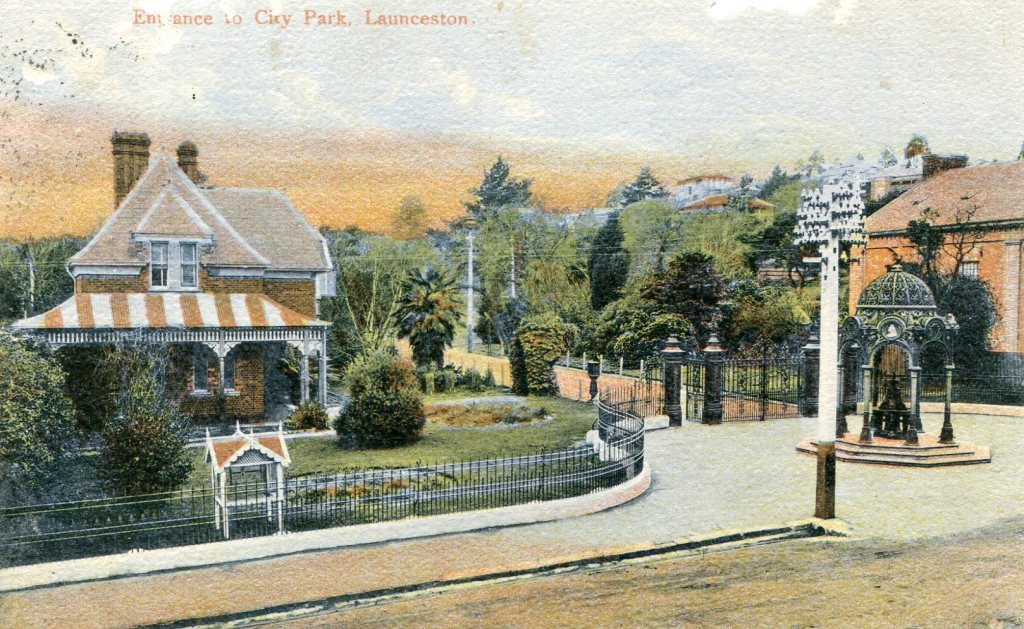
The Jubilee Fountain outside the main gates. [Postcard from private collection] 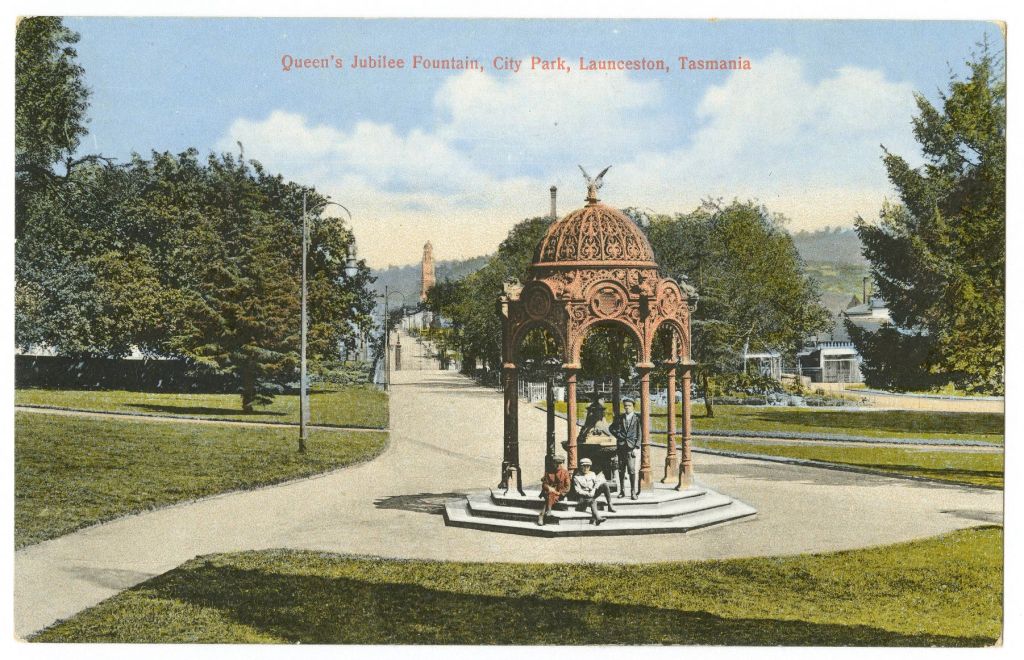
The Jubilee Fountain in its current location, with a clear view down Cameron St [Postcard courtesy of Libraries Tasmania] 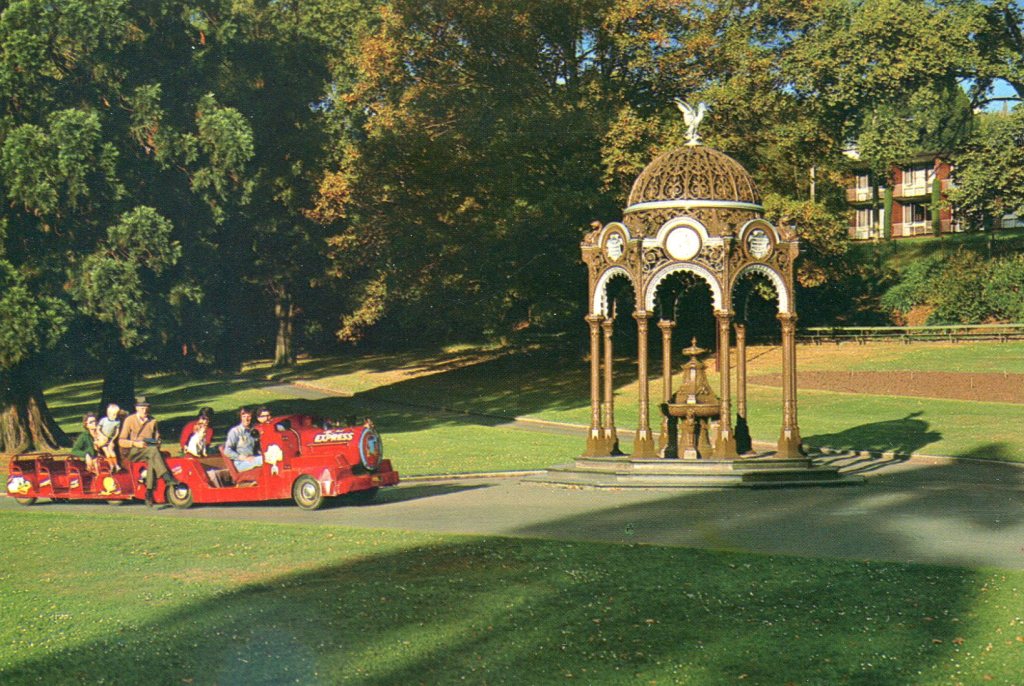
The Jubilee Fountain and the much loved little train. Late 1970s or early 1980s? [Postcard from private collection]
But Why Was the Fountain Moved, You Ask?
It’s a good question, and one the fine citizens of Launceston asked the Mayor themselves. The Mayor’s response was reported by the Daily Telegraph.
The mayor said that the fountain where it was at present situated was a perfect nuisance, owing to mischievous children throwing the water about. Almost every morning he had to give orders to have the entrance cleaned up, only to find it as bad as ever in the evening. It was right in the way of the gates, and destroyed the appearance of the entrance.
Daily Telegraph, 27 November 1908
When the Mayor was questioned as to whether children would still not play in the water once moved, he indicated they would not as groundmen for the park would be in the vicinity working. The Mayor indicated, in response to concern about how well utilised the fountain was, that a small drinking fountain would be installed near the caretaker’s house.
The fountain was moved less than a month later, on 17 December 1908 to its present site. This had previously been the location of a band rotunda.
The Fountain Today
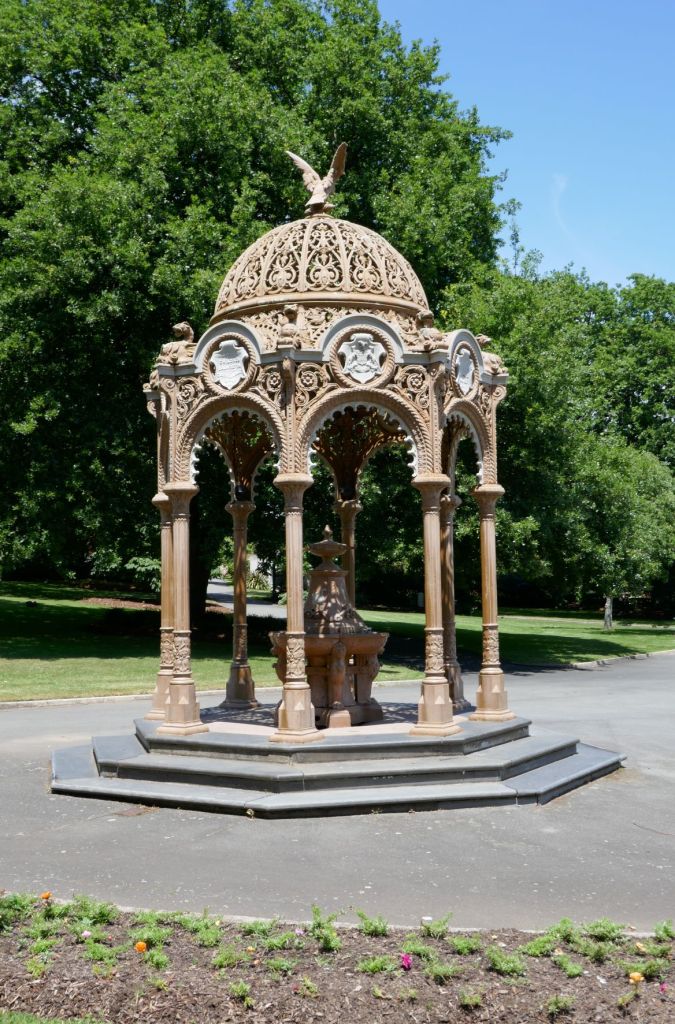


Conclusion
The Children’s Jubilee Fountain, originally intended as a gift to Launceston from the city’s children to commemorate Queen Victoria’s jubilee, has a fascinating history. Today, it continues to be a part of City Park, providing enjoyment for both young and old visitors.
Sources
City Park Information Board
Daily Telegraph, 27 November 1908
Daily Telegraph, 18 December 1908
Launceston Examiner, 27 September 1887
Launceston Examiner, 30 January 1888
Launceston Examiner, 18 June 1891
Macfarlane’s Casting Catalogue, https://tinyurl.com/bp7etr46 [accessed 12 January 2022]
 Tamar Valley Tales
Leave a comment