
Content Note: This story contains reference to spiritualism and the discovery of human remains in the 1890s.
Hobart, 1893
The wind pressed hard against the windows. The old Nurses’ Home near the Hobart General Hospital seem to hold its breath. The rooms, once used by nurses in starched uniforms, were dark. A small circle of chairs had been arranged. Those who had gathered sat with hands linked, the gas lamp turned low until the room blurred at the edges.
Tales had circulated for weeks among the men sleeping there for shelter. Of footsteps in the corridors when no one was awake. Of whispers in the dark. And of a woman’s shape glimpsed near a bricked up fireplace in the room. One man, frightened by her nocturnal visit, refused to return after nightfall.
The building has always had a reputation. Before the building became a shelter and soup kitchen, nurses spoke of uneasy nights. They told of the sound of someone, or something, moving through the rooms. The stories were old enough that no one knew how they began.
But on this night, in October 1893, a small group had come with a purpose.

The Séance at the Nurses’ Home
The former Nurses’ Home, situated near the Hobart General Hospital, was serving as temporary accommodation during a difficult period. Unemployment and hardship meant the rooms were crowded with men grateful for warmth and a meal. Among them were two young mean who, after a sleepless night of weird noises, carried their story into town. It reached the ears of two spiritualists, Messrs EB Gawne and Bagby, who decided to investigate.
A séance was arranged for the ‘purpose of inquiry’. The gathering included the two spiritualists, a medium and a small number of men and women. The lights were extinguished, hands were joined, and the circle was asked to be still.
Accounts later published in the papers described how the tension was heightened by the telling of ghost stories beforehand. The room eventually fell silent. Several claimed they saw a woman’s form appear from an aperture in the wall, and point towards the hearthstone. Panic ensued and the circle broke, with some fleeing the building.
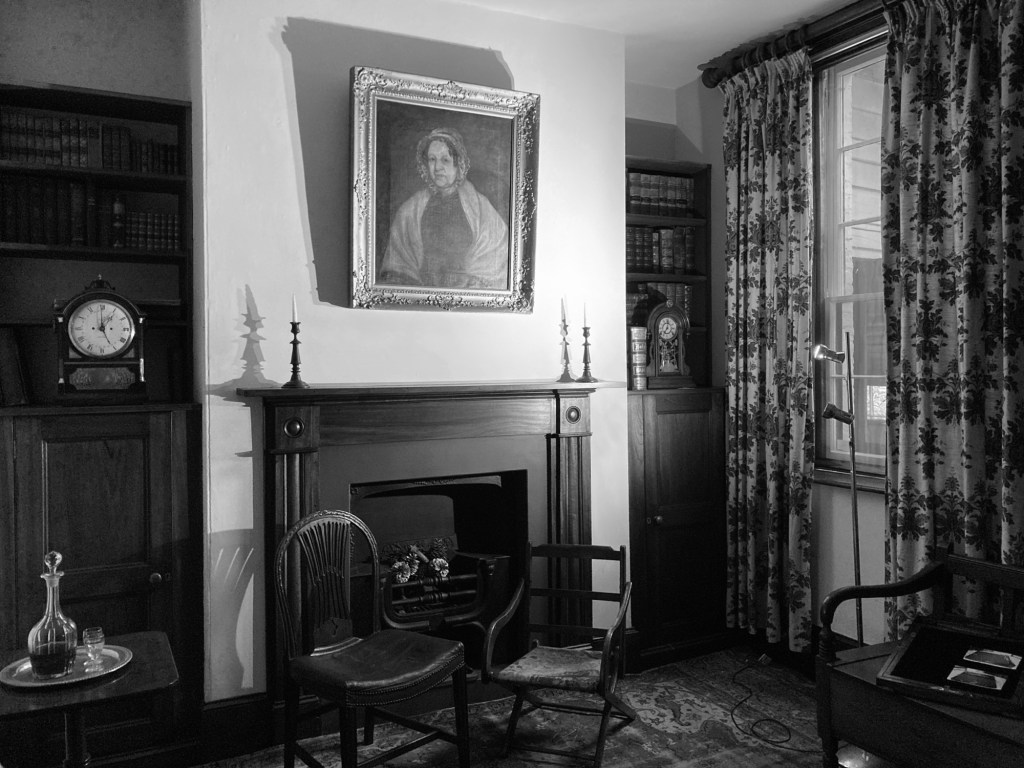
Hidden Beneath the Hearth
By morning, curiosity had replaced fear. Gawne and a labourer returned with permission to investigate. They lifted the hearthstone and removed several layers of brick beneath it.
They found bones.
Also found were scraps of cloth, an old safety pin, a spent bullet, and small household objects that had fallen and settled among the rubble.
Gawne collected the bones and, with confidence in the accuracy of the séance, believed they were the skeleton of a small child.
The police collected the remains for examination. While they investigated, the story took on a life of its own.
Tasmania and the Search for Meaning

Spiritualism was firmly rooted in Tasmania by the 1890s. Seances, table-turning and ‘circles’ took place in both drawing room and public venues. Some attended out of curiosity, others for comfort, and others in hope of hearing from their dearly deceased. For some, the veil between the living and the dead felt fragile. They hoped to lift the curtain and communicate beyond.
Sceptics were plentiful. Clergy cautioned against the practice and newspapers often reported with a raised eyebrow. Doctors blamed nerves, disturbed sleep or overwrought imaginations.
Reports of the Nurses’ Home séance were printed without either endorsement or mockery. One line captured the tone:
Whether the phenomena were spiritual or merely of earthly origin, each must judge for themselves.
Belief in spiritualism wasn’t confined to the eccentric or the uneducated. Decades later, Sir Arthur Conan Doyle, author of the eminently logical Sherlock Holmes, toured Australia advocating for spiritualism. Personal grief after the First World War led him to seek comfort in the possibility that death wasn’t the end. His convictions were a reminder that for many, spiritualism was about hope.
Police Conclude Their Investigation
But let us return to 1893. The events of that night in Hobart weren’t the tale of a violent haunting or the unmasking of a crime.
The police analysis was short and to the point; the bones were of an animal, likely a sheep or dog. Whatever the séance participants had seen, it wasn’t evidence of a crime. The noises, once attributed to a ghostly presence, were put down to the scurrying of rats.
The séance had led to a search. The search led to an answer. And the answer, prosaic as it was, didn’t entirely quiet the old building’s reputation.
A séance had been held. A spirit had been seen by more than one witness. Bones had been found where the figure pointed.
For those who believe, the facts didn’t fully extinguish the mystery.
Interested in More Ghost Stories?
If this haunting caught your interest, you’ll find more Tasmanian ghost stories gathered on our Ghosts of Tasmania page.
References
The Mercury, 16 September 1893, “A Strange Discovery”.
The Clipper, March 1893 – assorted coverage of local spiritualist activity.
The Mercury, March 1909 – assorted coverage of a séance at the Mechanic’s Institute, providing context for spiritualist practice and public attitudes in Tasmania.
Newspaper references to Tasmanian spiritualism in the 1880s-1900s, including séance circles, psychic demonstrations, and letters to the editors expressing scepticism or belief.
Background information on the former Nurses’ Home near the Hobart General Hospital, used in the 1890s as a shelter and soup kitchen for unemployed men.
References to the Spiritualist movement across Australia during the Victorian and Federation periods.
 Tamar Valley Tales
Leave a comment